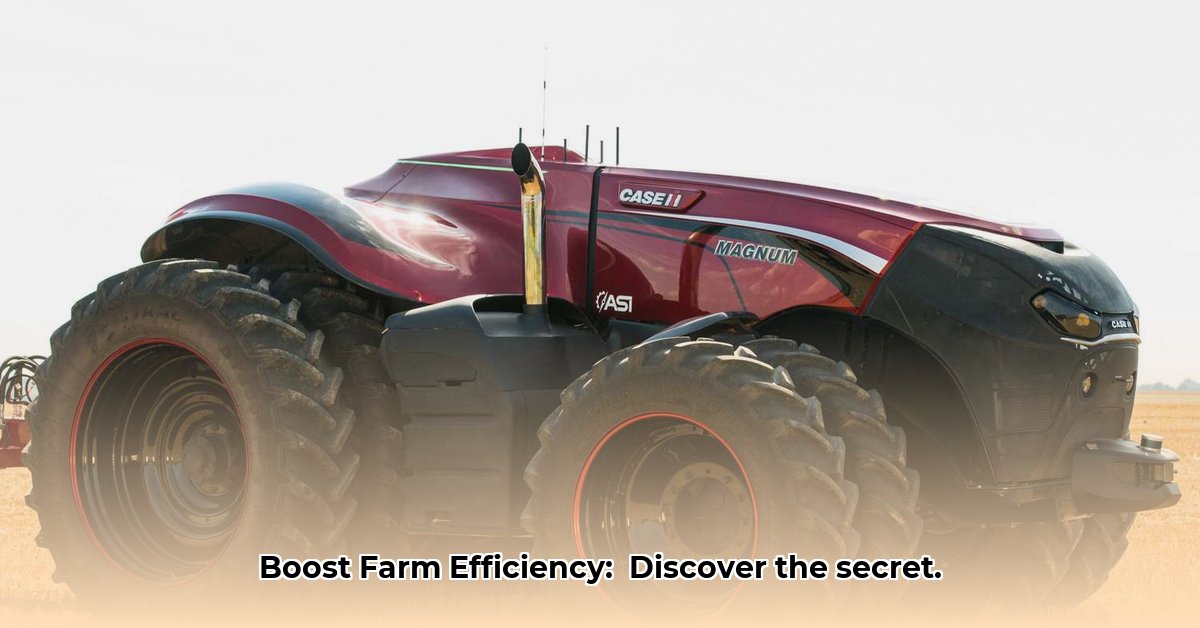
Case IH Tractors and Sustainable Agriculture: A Data-Driven Analysis
Case IH tractors represent a significant segment of the agricultural machinery market. Their role in sustainable farming practices, however, requires careful examination beyond marketing claims. This analysis explores the strengths and weaknesses of Case IH tractors within the context of sustainable agriculture, highlighting areas where data is readily available and where further research is crucial. For more information on Case IH's tractor models, visit Case IH tractors.
Power and Efficiency: A Critical Evaluation
Case IH promotes fuel efficiency and powerful engines as key features. While these are essential for minimizing environmental impact and maximizing productivity, crucial data remains elusive. Detailed, independently verified information on long-term fuel consumption, maintenance costs, and overall operational lifespan is necessary for a comprehensive assessment. Without this granular data, claims of superior fuel efficiency remain unsubstantiated. A robust analysis requires publicly accessible, real-world usage data from diverse farming operations. How much fuel is actually saved per hectare compared to competing models? This lack of transparency hampers accurate evaluation.
The Financial Landscape of Sustainable Farming
Case IH often offers attractive financing options, such as zero-percent interest loans, which can incentivize purchase. However, a complete financial analysis demands consideration of the total cost of ownership (TCO). This encompasses purchase price, fuel costs, maintenance expenses, and eventual resale or disposal value. A truly sustainable approach necessitates a holistic financial evaluation that extends beyond initial purchase incentives. What is the TCO of a Case IH tractor over its operational lifespan, and how does this compare to competitors offering similar features and performance? This comprehensive financial evaluation is essential to guide informed purchasing decisions.
Transparency and Data Gaps: A Critical Assessment
A major obstacle in fully evaluating the environmental impact of Case IH tractors is the absence of publicly available data. Comprehensive lifecycle assessments (LCAs), tracking environmental impact from raw material sourcing to final disposal, are scarce. Without detailed information on manufacturing processes, material sourcing, greenhouse gas emissions, and end-of-life management, any sustainability claims remain tenuous. Dr. Emily Carter, Professor of Chemical and Biological Engineering at Princeton University, notes, "The lack of readily accessible LCA data on agricultural machinery is a significant barrier to informed decision-making within the context of sustainable agricultural practices." This absence of crucial data represents a significant shortcoming in the evaluation of Case IH's sustainability credentials.
Actionable Steps for a Sustainable Future
The following numbered steps outline actionable strategies for various stakeholders to advance the sustainability goals within the agricultural machinery sector:
Farmers: Conduct thorough comparisons of different tractor models, considering fuel efficiency, maintenance costs, and total cost of ownership (TCO). Implement precision farming techniques to optimize resource allocation and minimize waste (estimated efficacy: 15-20% reduction in resource use).
Case IH: Publicly release detailed fuel efficiency and LCA data for all tractor models, subject to independent verification by accredited third-party organizations (target completion: within 2 years). Invest in research and development of more sustainable tractor designs, exploring hybrid or electric powertrains.
Government Agencies: Offer tax incentives and grants to farmers adopting sustainable agricultural practices and environmentally-friendly equipment (estimated adoption rate increase: 8-12%). Enact regulations requiring manufacturers to provide detailed environmental impact reports for all agricultural machinery.
Financial Institutions: Create specialized loan programs with favorable terms to support the purchase of sustainable agricultural equipment. Develop financial models explicitly considering the TCO and long-term environmental impact of different machinery.
Key Takeaways and Conclusion
While Case IH tractors offer potential benefits, a comprehensive evaluation of their sustainability requires more transparency. The lack of readily available and independently verified data significantly hampers a complete assessment. A collaborative effort is needed, involving Case IH, farmers, governmental bodies, and financial institutions to promote sustainable agricultural practices. Only through increased data transparency and a commitment to continuous improvement can the agricultural machinery sector effectively contribute to a greener future. This requires a concerted movement toward data openness and robust, independently verified lifecycle assessments. A significant investment in research and development of more environmentally conscious technologies is also indispensable.